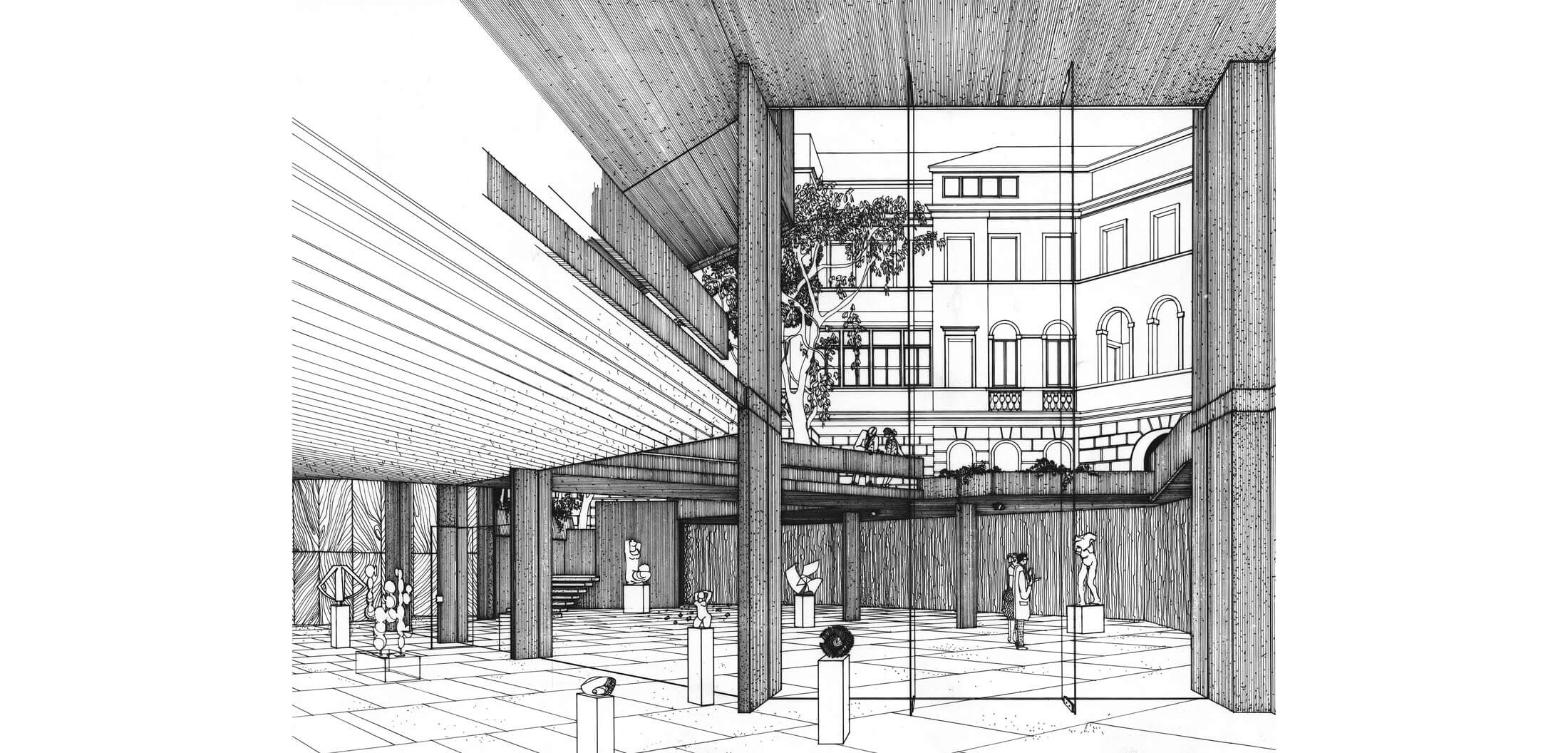
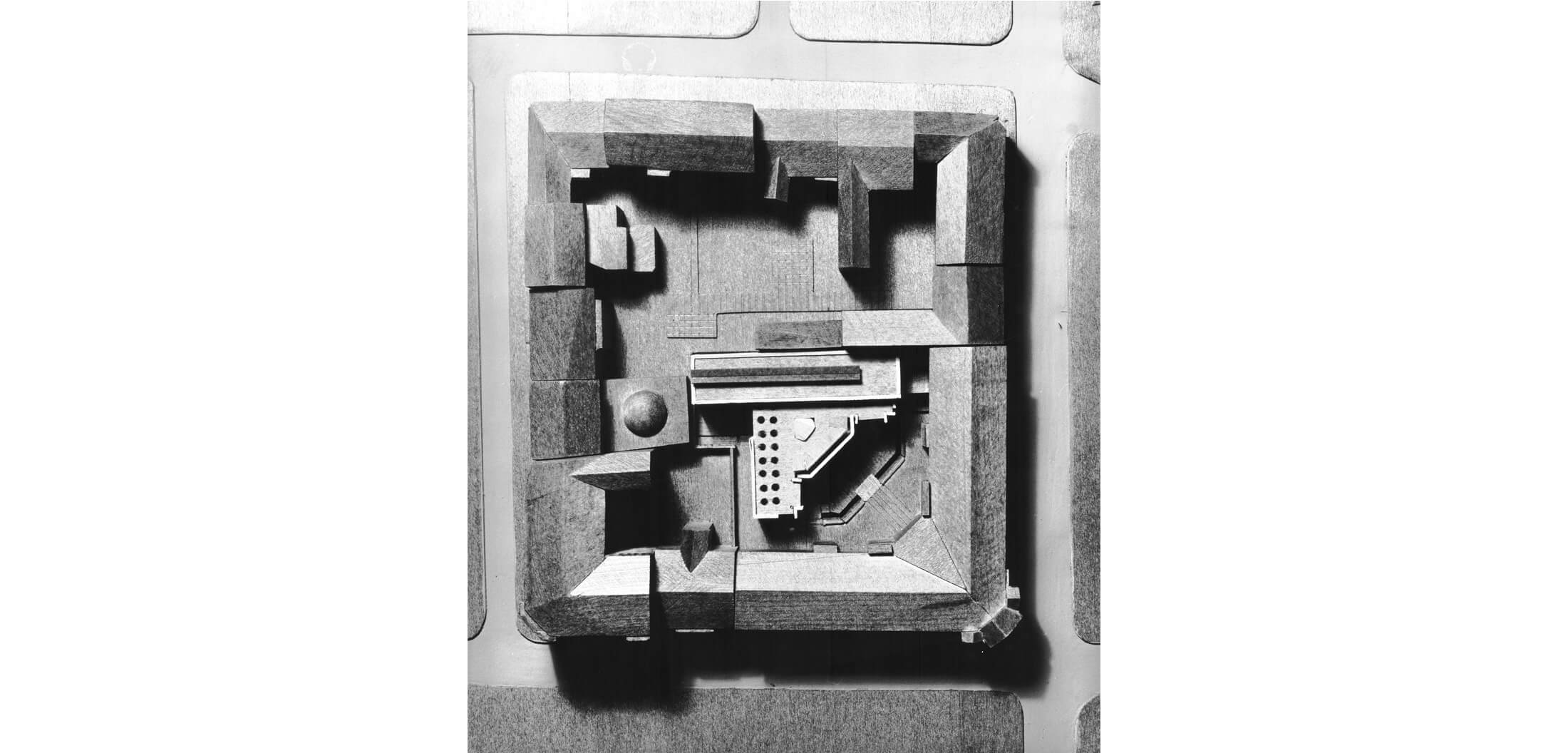
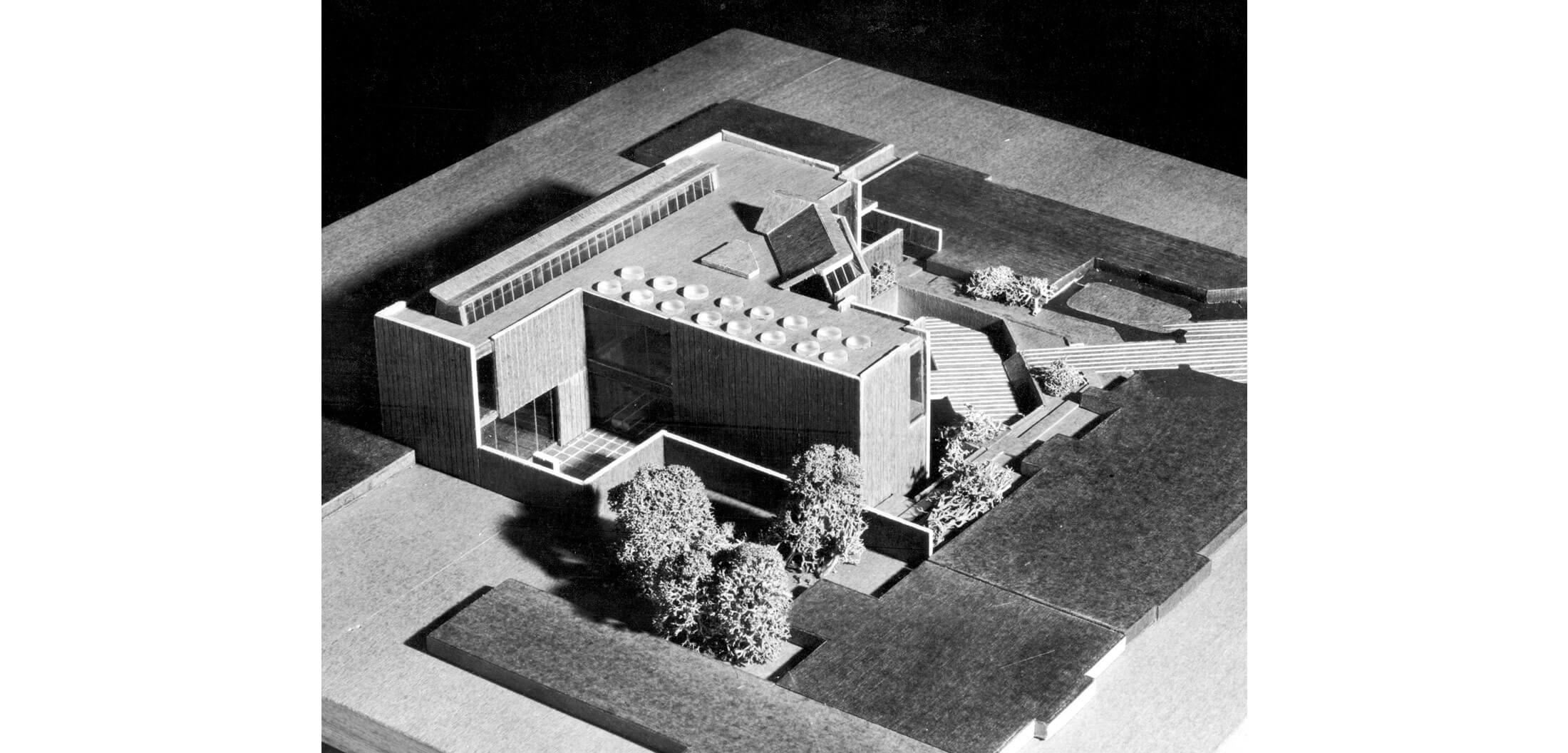
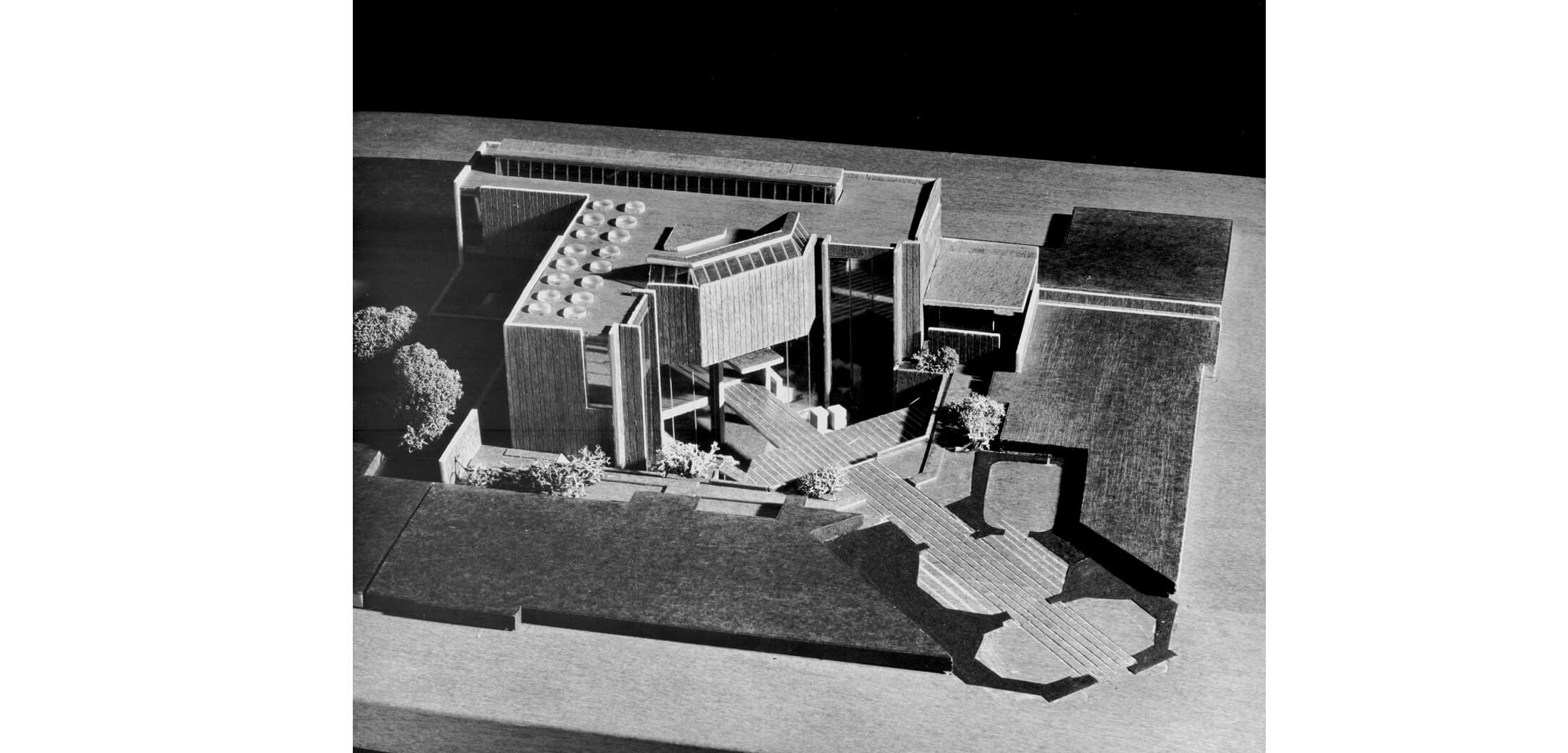
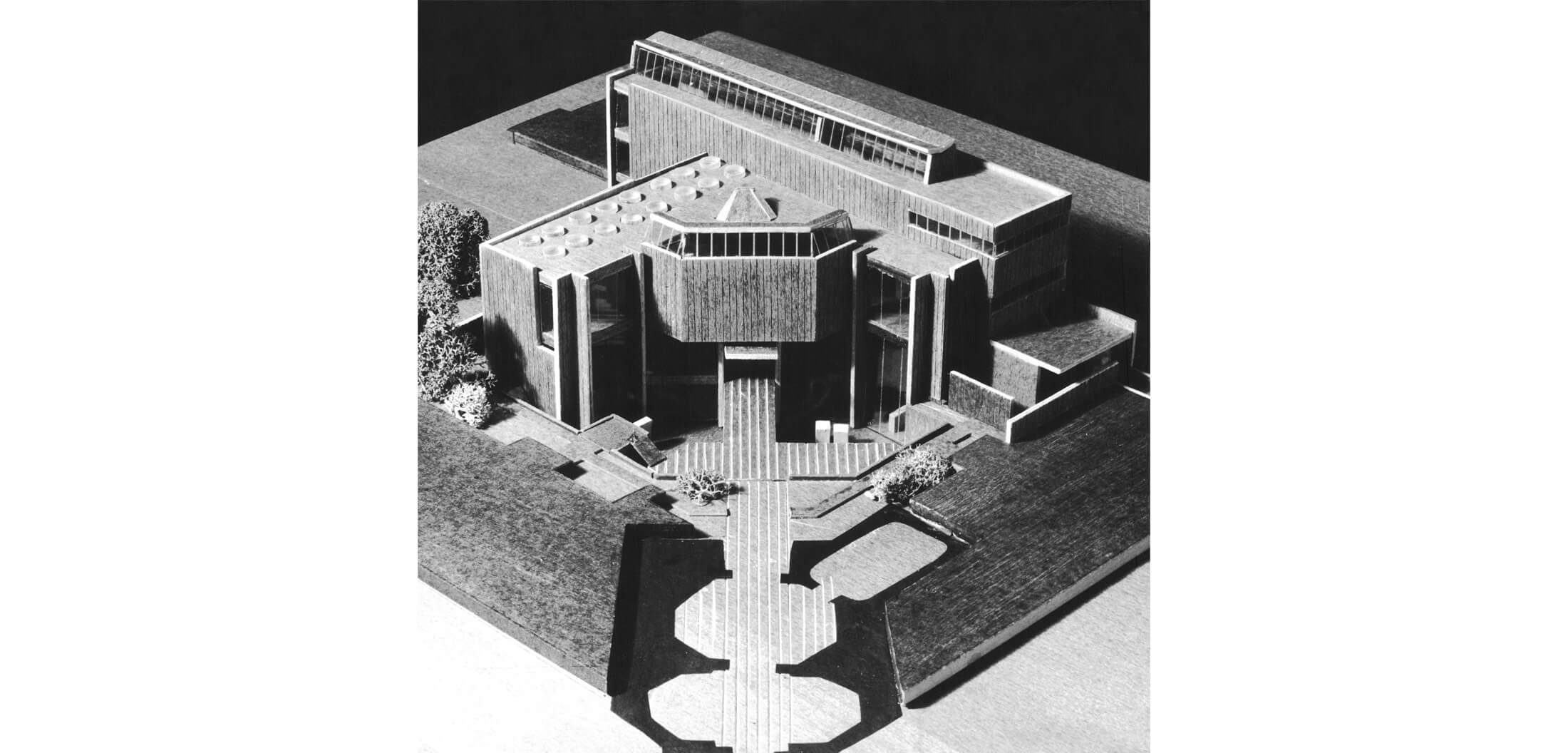
Begović's association with an entire generation of visual artists reached its peak in the 1920s with his unbuilt addition to the Modern Gallery in Zagreb, located in an exceptional 1883 neo-Renaissance corner building designed by Viennese architect Otto van Hofer. The spacious courtyard was well suited to housing additional gallery halls, and so Begović decided to connect the new building by adding two wings to the existing two, creating an almost square block with an additional, diagonal connection in the courtyard directed towards the main entrance. The existing and new buildings were thus connected into a functional whole with an emphasised diagonal flow from the corner entrance of the old palace to the courtyard and the main entrance to the new building and the entire gallery complex. Begović's diction, as noted by Academician Mutnjaković, takes on an entirely different connotation here—as this was the gallery of his painter, sculptor, and graphic artist colleagues, he no longer reflected on historical neo-Renaissance heritage, instead opting for an architectural form of expression in line with the world view and artistic attainments of his generation and the achievements of the founders of modern art. He therefore designed the Modern Gallery in the spirit of cubist architecture: powerful, expressive volumes with open, glass envelopes. This pluralistic relationship between the old and new is also apparent in numerous international gallery renovations. In contemplating the dichotomy of old and new, Begović approached each project individually, carefully balancing novelty and archaism, recreation and creation.