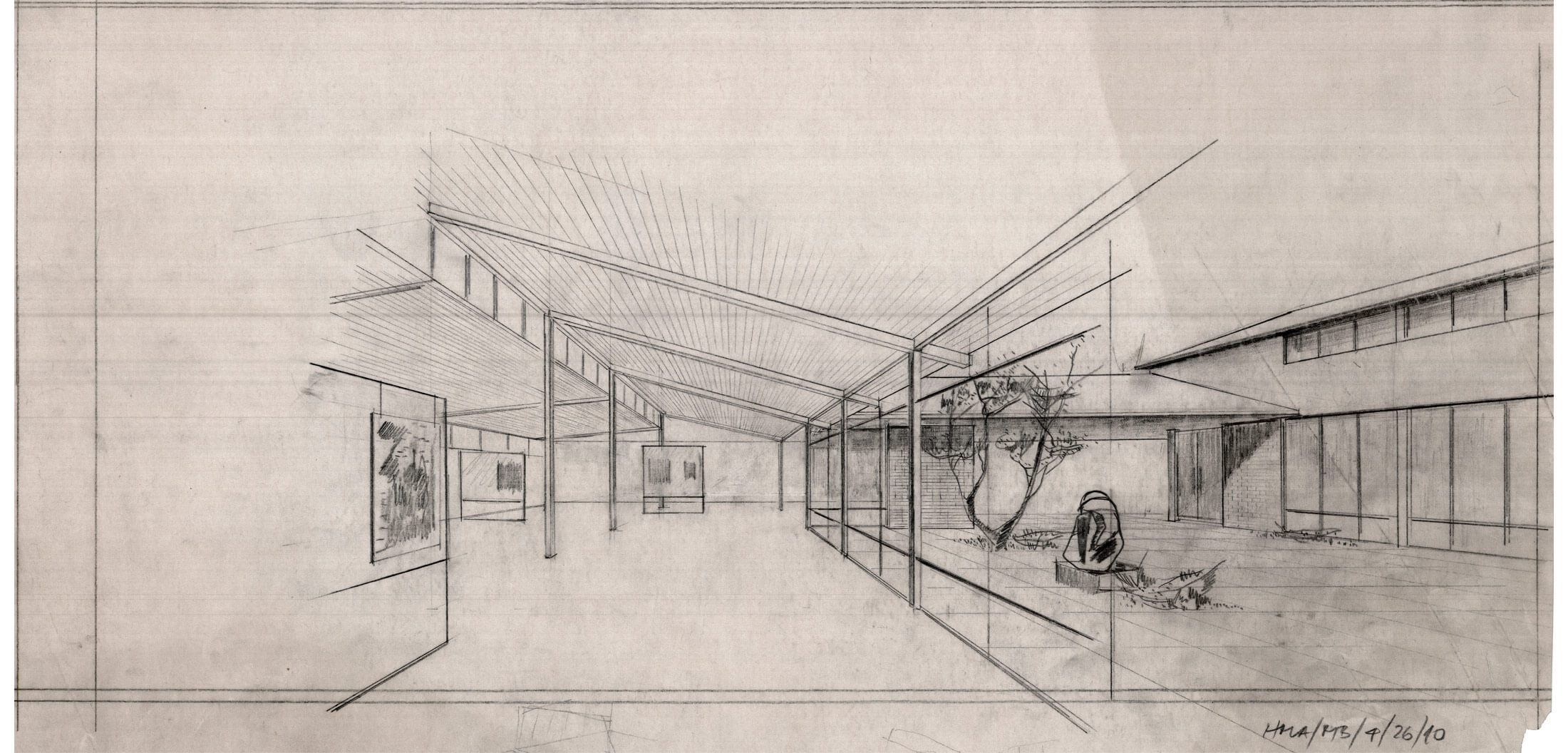
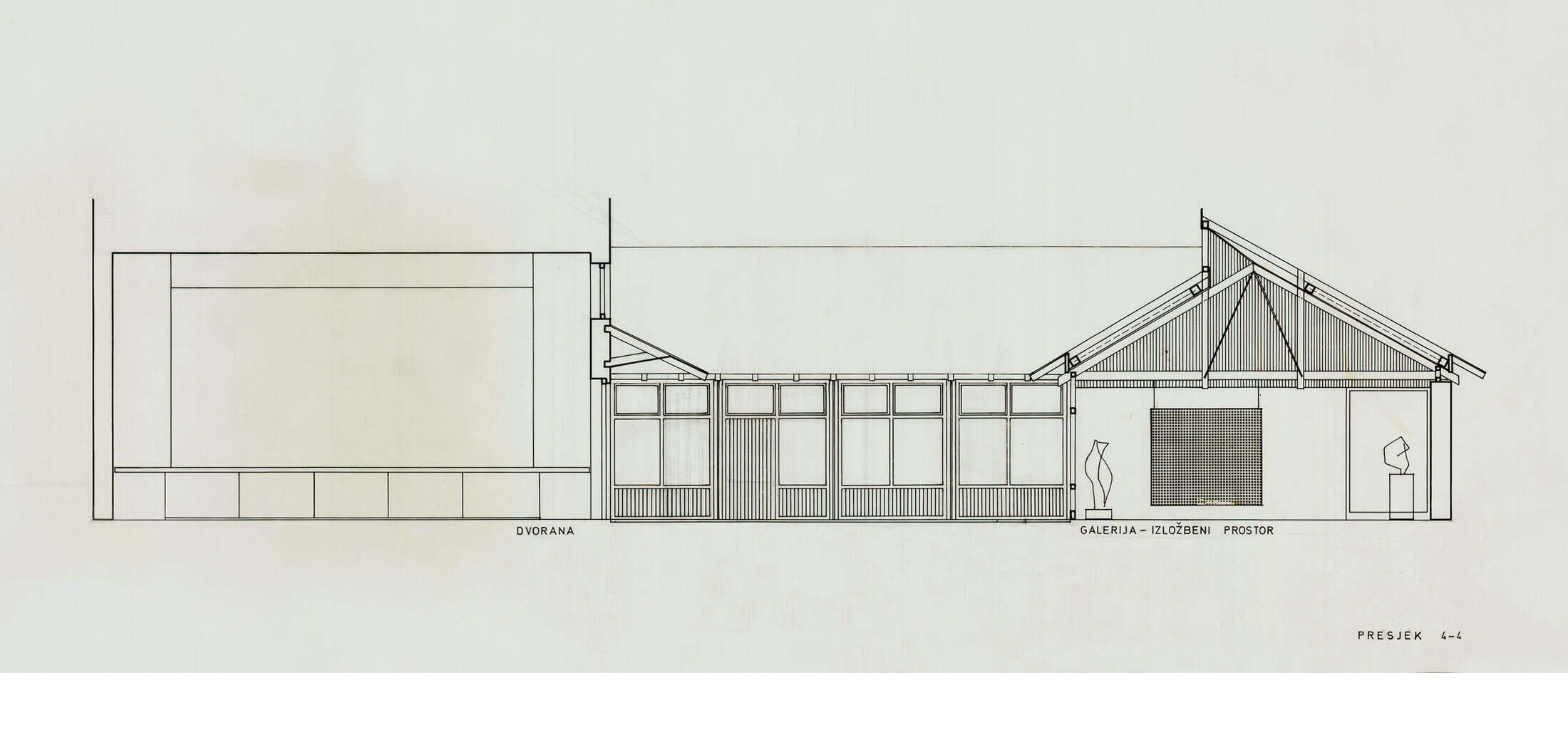
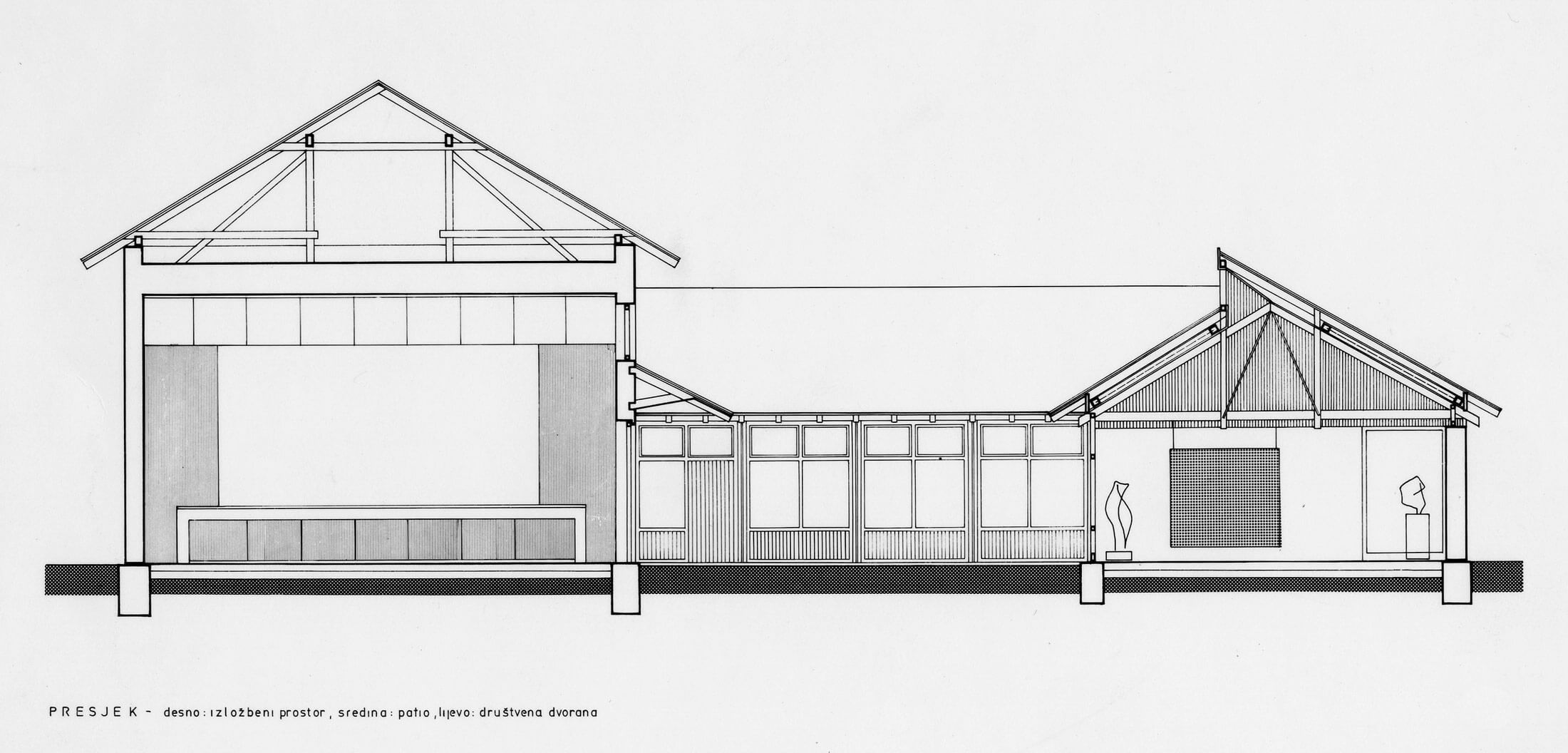
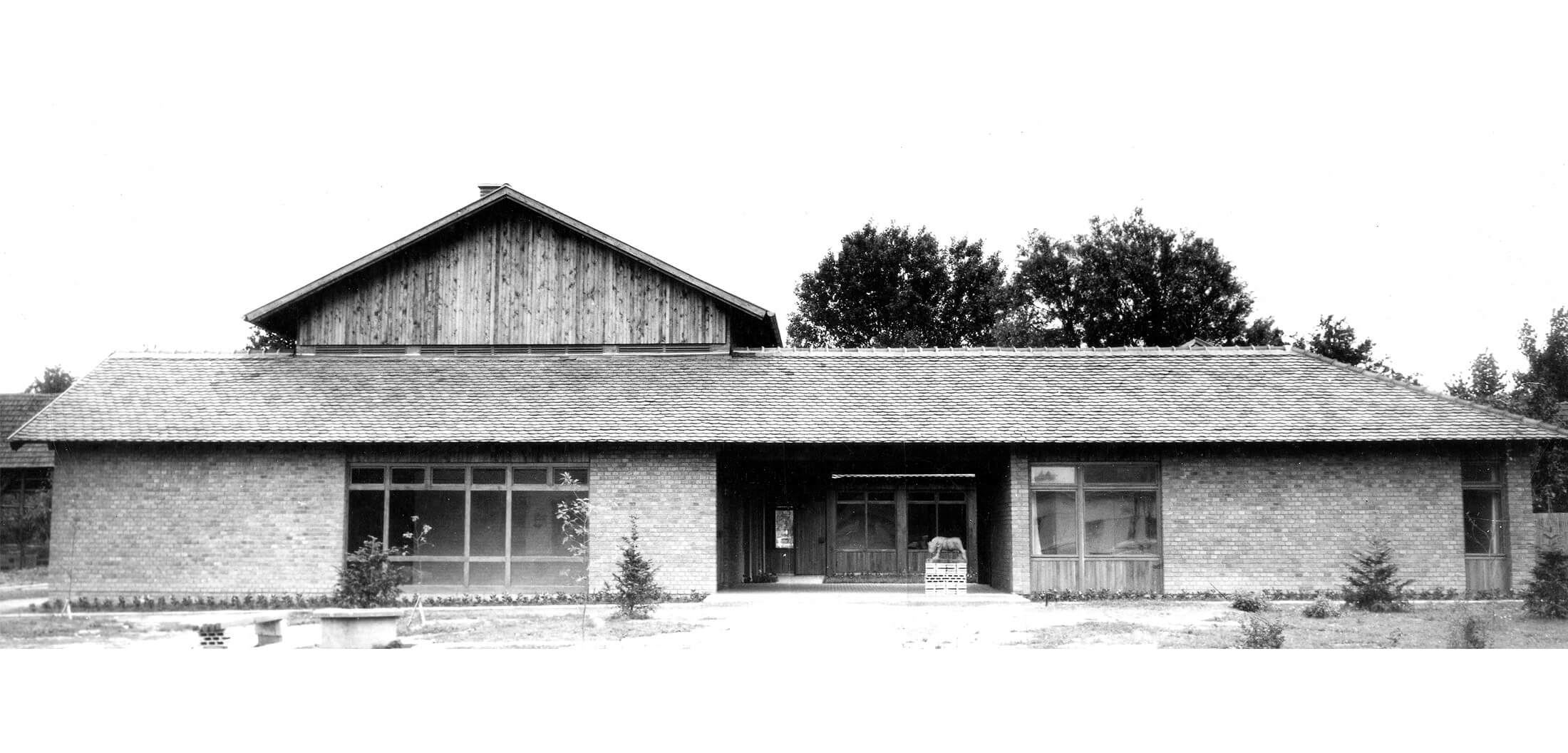
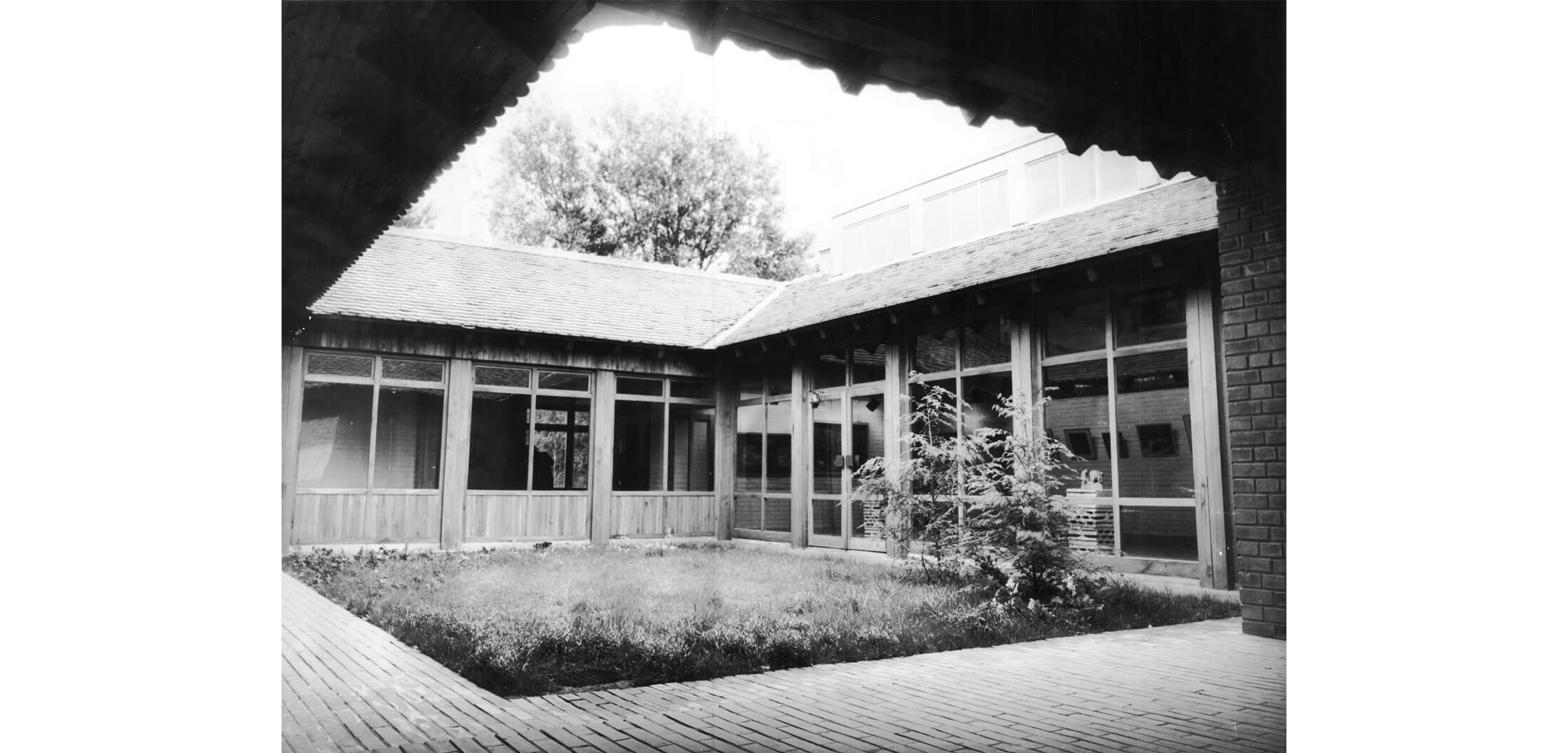
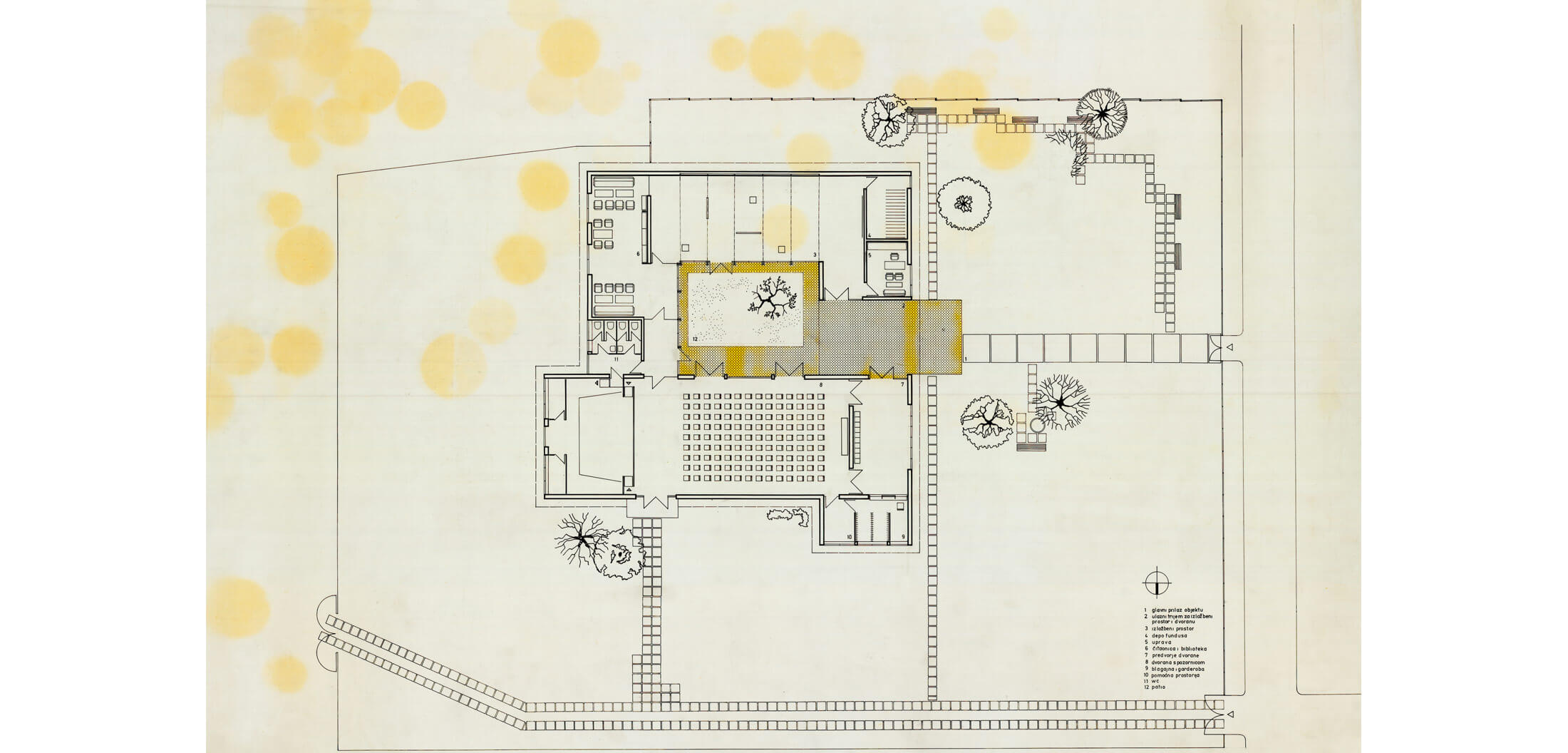
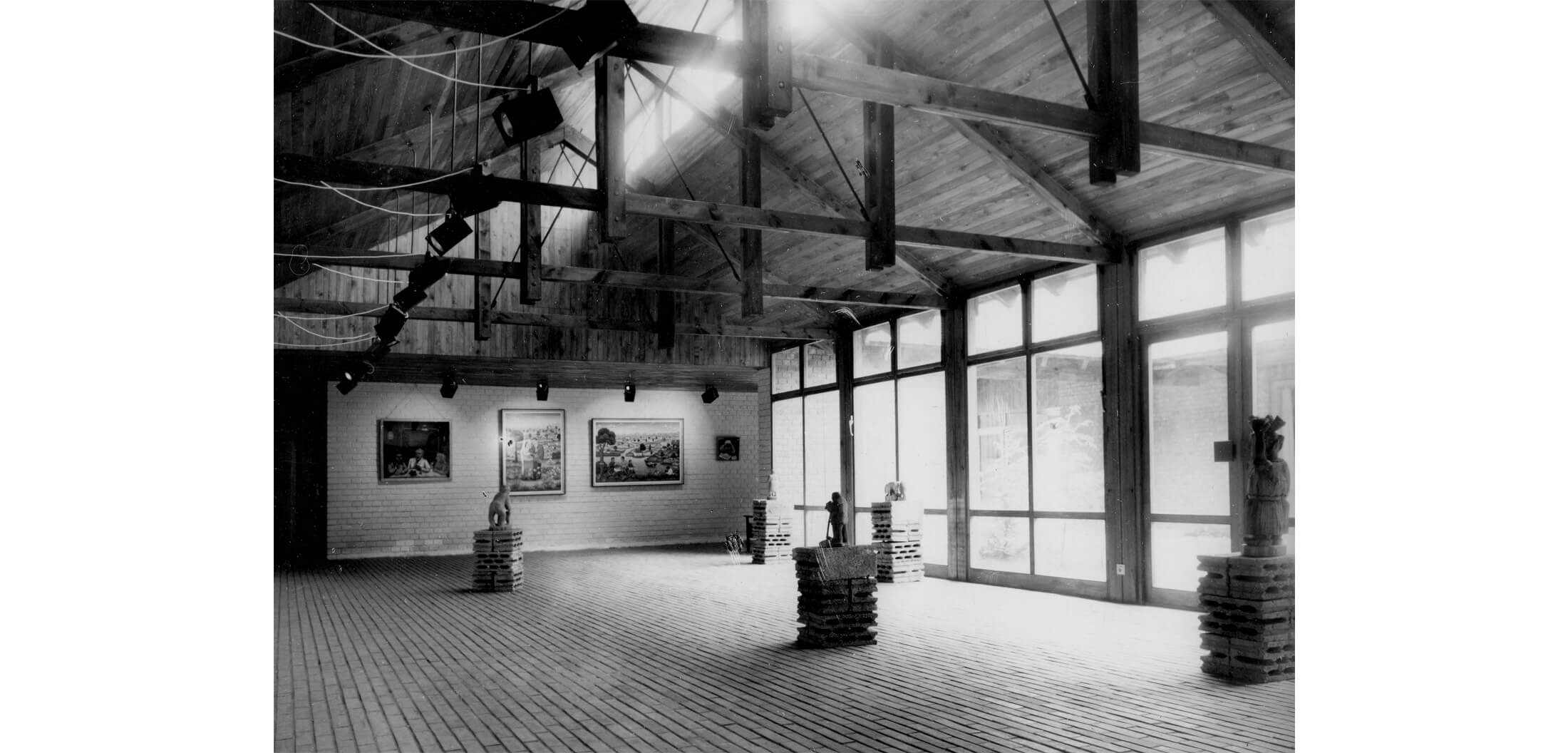
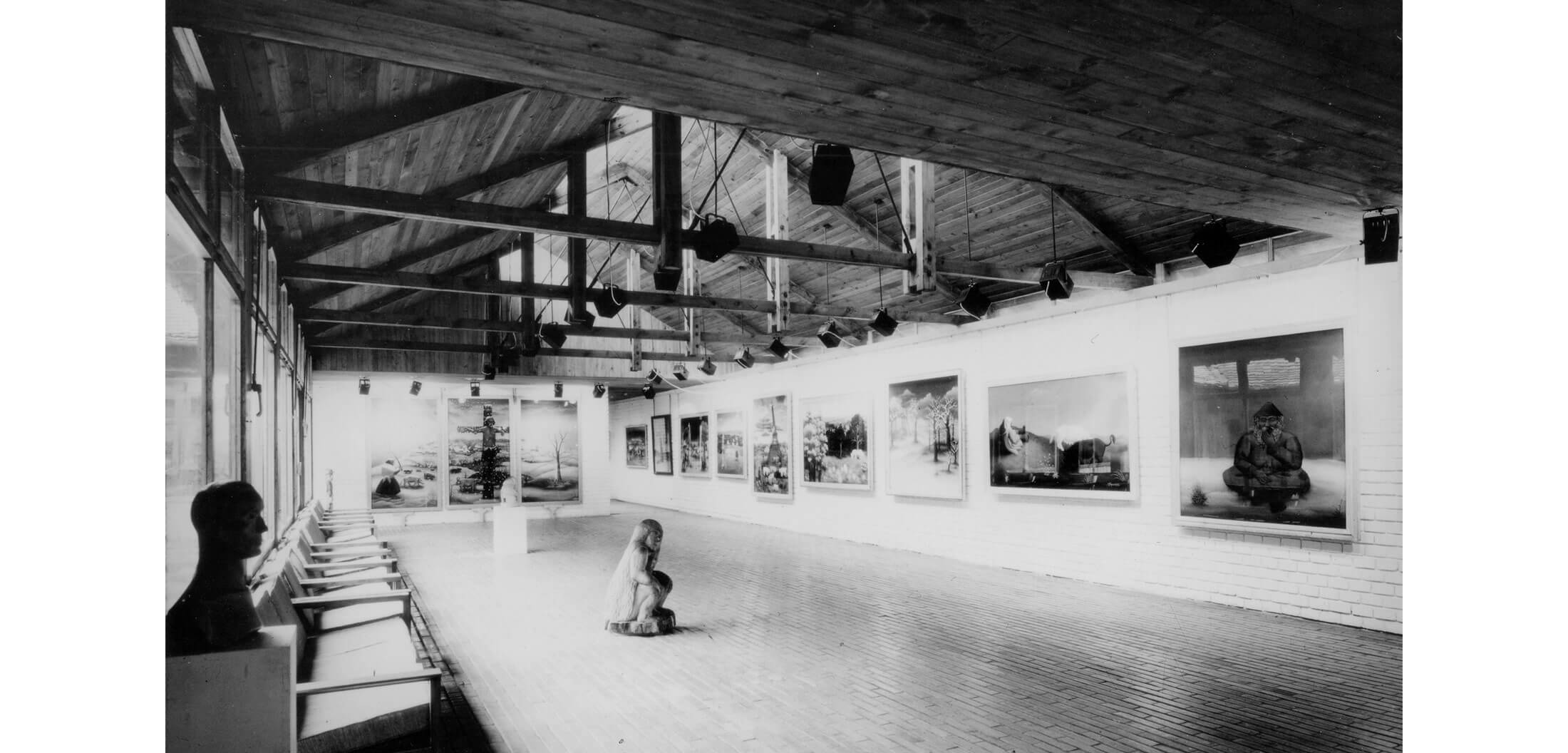
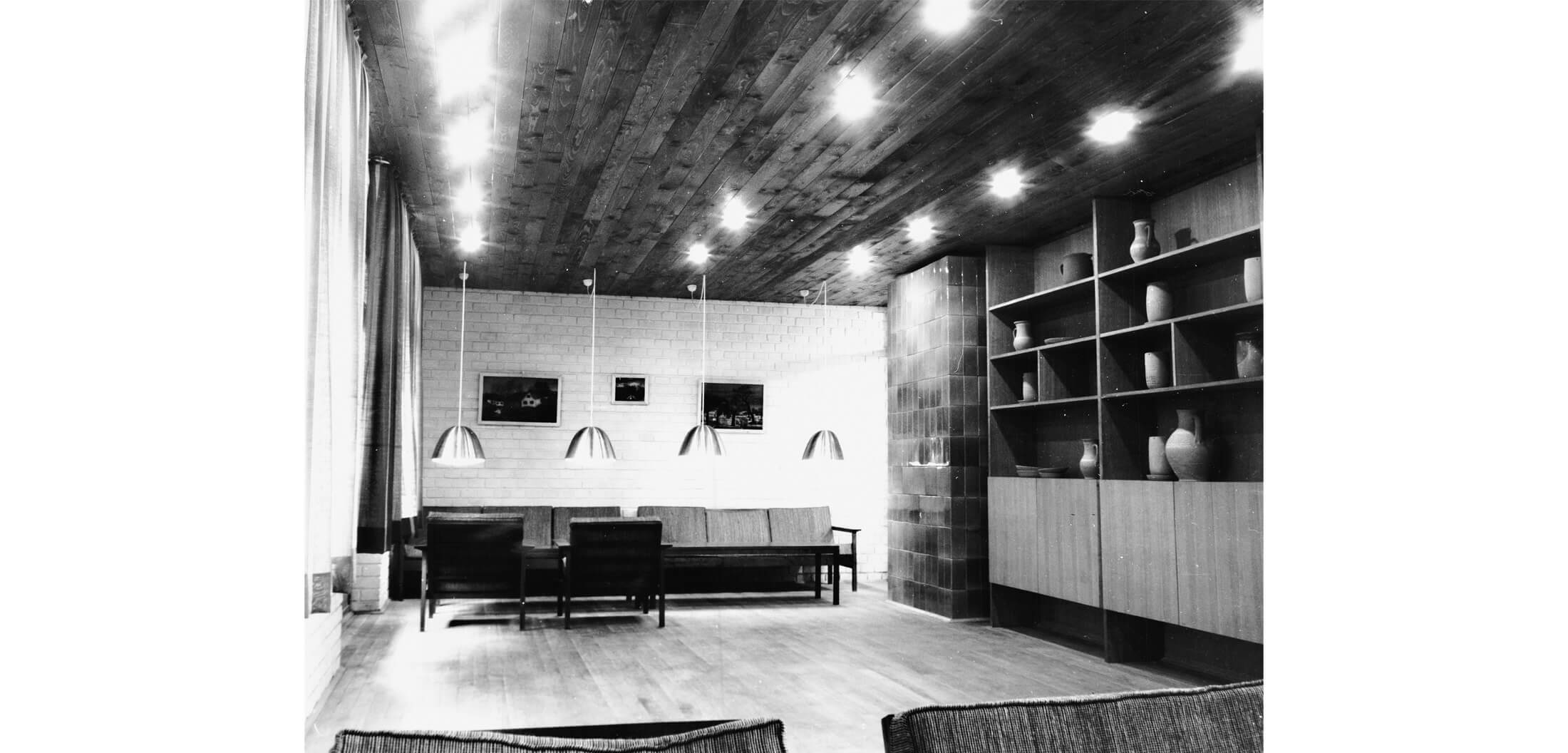
Creating a space for a particular work of art requires the architect to understand the art for which the space is being created; in this case, Begović also sought to understand the idiosyncrasies of the region in which this naïve art came about. By taking on the project design and the construction of the Naïve Art Gallery, he too became a part of the naïve art world—but with an architecture expressing the modern International Style. Incorporating the proportions and materials of local architecture, Begović created distinctive systems of courtyards by deconstructing the roof structure. He carefully composed the space of the new gallery using elements of rural architecture—modest single-storey homes and outbuildings to which he added roof apertures—as well as the functional elements of modern architecture, such as glass exterior walls. Preserving naïve art through naïve architecture created a symbiosis which—as noted by Academician Andrija Mutnjaković—takes on an ontic excellence based on contemporary gallery technology. In his text written after Begović received the Viktor Kovačić Lifetime Achievement Award, Mutnjaković cites architect Sena Gvozdanović-Sekulić, saying: "Architecture should not only be fluent in the art for which it is creating a space, but also in the local conditions where it is to serve an adequate architectural function." The Hlebine Gallery thus shows the beginnings of Begović's research into the socially conscious conceptions of modern art museums, clearly establishing that a work of art is indivisible from the space in which it was created.